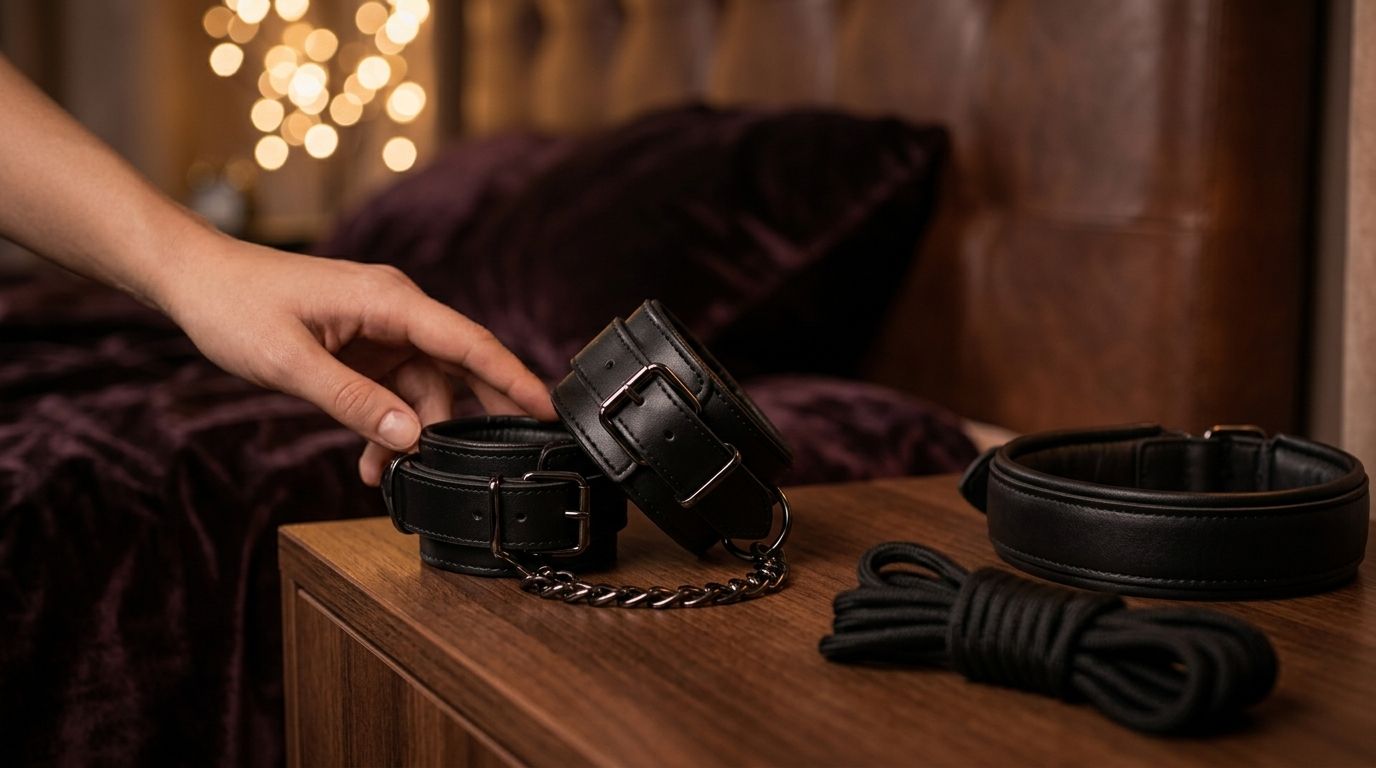
Best overall for a gentle introduction: Ashley. Best for symbolic role-play: Kylie. Best for deliberate impact play: Megan. Best for exploring several accessory types: Axel. This guide ranks bondage devices by intensity as a choice about restriction, sensation and communication—not a challenge to go harder—and focuses on options from Honey Room.
- Ashley leads Honey Room’s bondage devices by intensity shortlist for couples starting with cuffs and masks.
- Kylie suits symbolic role-play; never use a collar or leash to apply neck pressure.
- Megan is an impact-play choice, not an automatic next step after restraints.
- Axel offers several accessory types; introduce them separately rather than combining everything.
What makes the best bondage devices by intensity?
The best choice fits what you both want to explore, not what looks most adventurous. For this 2026 shortlist, these criteria matter more than appearance or the number of accessories:
- Freedom to stop: You need a clear way to pause, communicate and remove an accessory promptly.
- Type of intensity: Restricted movement, covered vision, role-play and impact create different experiences. They are not interchangeable.
- Fit and comfort: Check closures, edges and adjustment before making an accessory part of your time together.
- Learning demands: A single accessory keeps the conversation simpler than several unfamiliar pieces used together.
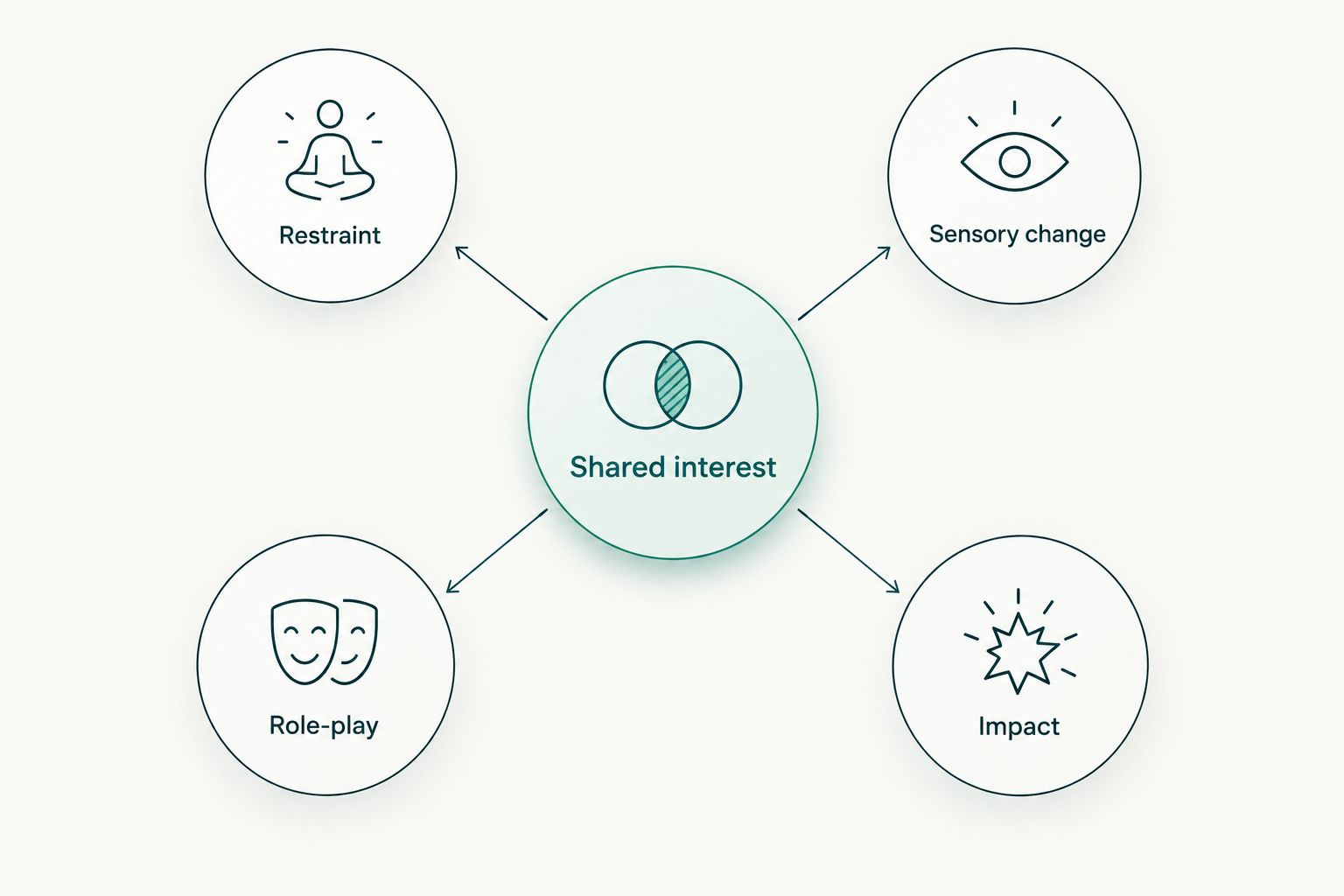
- Shared interest: Both adults need to want the specific activity. Agreeing to one accessory does not mean agreeing to everything in a kit.
Honey Room’s Ashley is the best starting point on this shortlist for couples interested in cuffs and masks, provided they introduce each separately. It gives the clearest route into a conversation about restraint without making impact play part of the decision.
Bondage devices at a glance
| Rank | Item | Best for | Standout feature | Main limitation | Intensity context |
|---|---|---|---|---|---|
| 1 | Ashley | A gentle introduction to restraint accessories | Cuffs and masks | Combining restricted movement and vision adds complexity | Start with one accessory |
| 2 | Kylie | Symbolic role-play | Collar with a leash | Neck pressure is not an acceptable use | Keep the leash slack |
| 3 | Megan | Deliberate impact-play exploration | Bamboo paddle, 32 cm long | A rigid striking accessory needs separate discussion and care | Sensation depends on use |
| 4 | Axel | Exploring several accessory types | Kit containing wrist restraints, an eye mask, a whip and a collar | More pieces create more decisions | Introduce pieces separately |
The order is a buying decision tree, not a measured force ranking. A collar worn without tension is not automatically more intense than cuffs, and a kit is not automatically more intense than a paddle.
Why this matters
Shopping for bondage devices by intensity in 2026 should start with a better question: What kind of experience are you both curious about? Feeling less in control, wearing a role-play accessory and exploring impact are different preferences, not successive levels of achievement.
The useful distinction is between sensation and responsibility. An accessory can look understated while still requiring careful attention to fit, circulation or communication. Equally, owning several pieces does not mean you need to use them together.
Before choosing, separate your interests into these categories:
- Restraint: Limiting movement.
- Sensory change: Changing what you can see.
- Role-play: Giving an accessory an agreed meaning.
- Impact: Introducing a striking sensation.
A useful conversation sounds less like a dare and more like planning a date. Ask what sounds appealing, what is off the table and how you will tell each other that something needs to change.
1. Ashley: best bondage accessories for a gentle introduction
Ashley includes cuffs and masks. That makes Ashley a focused option for couples curious about restraint accessories and changes to vision, without choosing an impact accessory at the same time.
Start by looking at the pieces together while nothing is fastened. Discuss whether either accessory appeals to you on its own; buying a set does not create an obligation to use every piece.
Ashley pros
- Cuffs and masks offer distinct experiences to discuss.
- You can introduce an accessory separately rather than combine everything.
- The set suits a conversation centred on restraint and sensory preferences.
Ashley cons
- Restricting movement and covering vision together makes communication more demanding.
- Cuffs require attention to fit and prompt removal.
- Ashley is the wrong direction if neither person enjoys restraint or covered vision.
Best for: Couples who want a gentle introduction to restraint accessories and are comfortable talking throughout.
For your first experience, keep vision clear if you are trying the cuffs. If you prefer the mask, leave movement unrestricted. That separates the sensations and makes it easier to explain what you actually enjoy.
Verdict: Buy Ashley for a gradual introduction, not for combining restraint and covered vision immediately.
2. Kylie: best bondage accessory for symbolic role-play
Kylie is a collar with a leash. Its place on this list is about agreed symbolism and role-play—not using the neck as a restraint point.
Talk about what wearing a collar means to each of you before putting it on. One person might find the idea playful while the other reads it as a much stronger statement; neither interpretation should be assumed.
Kylie pros
- A clear role-play focus keeps the buying decision specific.
- Kylie does not require adding an impact accessory.
- You can discuss the meaning of the accessory before introducing physical restriction.
Kylie cons
- A leash creates a foreseeable temptation to pull; do not apply neck pressure.
- Kylie is not a substitute for purpose-designed wrist restraints.
- Neck-worn accessories will not suit everyone’s comfort or boundaries.
Best for: Adults who want symbolic role-play without pulling, tightening or restricting breathing.
Keep the leash slack. Never use Kylie to suspend, drag or immobilise someone, and remove the collar if it causes discomfort. A playful accessory does not make pressure on the neck safe.
Verdict: Buy Kylie only for mutually agreed, pressure-free role-play; skip Kylie if neck-worn accessories feel unwelcome.
3. Megan: best bondage accessory for deliberate impact play
Megan is a bamboo paddle measuring 32 cm long. Unlike cuffs or a mask, Megan belongs to impact play, so choosing Megan calls for a separate conversation about sensation and boundaries.
The length describes the accessory, not its intensity. Material, contact and how an accessory is handled all matter; a product dimension cannot tell you what another person will find comfortable.
Megan pros
- The bamboo construction identifies Megan as a rigid paddle.
- The stated 32 cm length gives you a concrete size reference.
- A single-purpose accessory keeps the discussion focused on impact rather than several activities.
Megan cons
- Impact adds a risk of injury that appearance alone cannot communicate.
- A rigid paddle is not interchangeable with a soft restraint accessory.
- Megan is unsuitable when either person is uncertain about impact play.
Best for: Adults who have explicitly agreed to explore impact and understand that agreement must remain changeable.
Do not treat Megan as the next level after Ashley or Kylie. Impact is optional, and curiosity about a mask says nothing about interest in a paddle. Learn appropriate safety precautions before use, keep communication open and stop at pain, distress or uncertainty.
Verdict: Hold on Megan until you have discussed impact specifically; buy only when both adults actively want that experience.
4. Axel: best bondage kit for exploring accessory types separately
Axel is a bondage kit made with PVC and metal. Its listed pieces include wrist restraints, an eye mask, a whip and a collar, bringing several different categories into one purchase.
That variety is Axel’s strength and its main complication. The sensible approach is to treat each accessory as a separate choice, with its own boundaries and handling requirements.
Axel pros
- Several accessory types let you compare different interests.
- Wrist restraints and an eye mask cover distinct restraint and sensory categories.
- The kit includes role-play and impact-related accessories as well.
Axel cons
- A larger selection increases the temptation to combine unfamiliar activities.
- Agreement to the kit does not establish consent to every piece.
- The whip and collar require different precautions from wrist restraints.
Best for: Couples who already communicate clearly about boundaries and want to consider several accessory types individually.
Lay the pieces out before deciding what belongs in the evening. Set aside anything either person does not want, then choose one agreed activity. Leave the rest for another conversation—or do not use it at all.
Verdict: Buy Axel for considered variety; skip Axel if a larger kit makes the decision feel pressured or confusing.
Compare the shortlisted accessories
These Honey Room options serve different interests. Choose the category you both want before choosing the accessory; the largest set is not the default winner.


Before you try anything together
A good 2026 shopping shortlist still needs an ordinary conversation before it becomes a shared experience. Make these checks while you are both comfortable and able to make clear decisions—not after someone is already restrained.
Agree on boundaries
Name the activity you are considering and what is excluded. Permission for a mask is not permission for cuffs, and permission for cuffs is not permission for impact. Either person can change their mind without explaining or apologising.
Keep stopping simple
Agree on a clear stop word and a nonverbal signal before starting. Ordinary requests to stop count too; nobody needs to remember special language for a boundary to matter. If someone cannot communicate clearly, stop rather than interpret silence as agreement.
Check removal and comfort
Read the accessory’s instructions and check how its closures work before use. Keep release mechanisms accessible, never leave a restrained person alone and stop immediately for numbness, tingling, pain or changes in skin colour.
Keep the experience separate from the purchase
Buying an accessory is not a promise to enjoy it. You can try discussing it, decide against using it and still have a lovely evening together. That freedom makes an honest answer easier.
How the ranking works
This 2026 ranking prioritises a clear use case, manageable decision-making and the ability to introduce accessories separately. Ashley leads for a gentle introduction, Kylie serves symbolic role-play, Megan addresses impact and Axel offers variety.
The ranking does not assign force scores or claim that one item produces a predictable sensation. Product descriptions establish what the accessories are; your boundaries determine whether they belong in your relationship.
Which bondage devices should you choose?
Choose Ashley if you are undecided and both interested in restraint accessories. Start with one piece, keep communication easy and leave combined experiences for a separate decision.
Choose Kylie for pressure-free symbolic role-play, Megan only for an explicit interest in impact, or Axel when you want to consider several accessory types separately. For a 2026 purchase, the right verdict is the same: buy for shared curiosity, never to persuade a hesitant partner.
FAQ
What are the best bondage devices by intensity for beginners?
Ashley is the strongest starting point on this shortlist for adults interested in cuffs and masks. Introduce one accessory at a time rather than combining restricted movement and covered vision.
Is a bondage collar less intense than handcuffs?
A collar and cuffs create different experiences, so neither has a fixed intensity ranking. Kylie is recommended here only for symbolic role-play with no neck pressure or leash tension.
Is Megan a good next step after trying a mask?
Megan is not an automatic next step because impact play is a separate preference. Discuss impact explicitly and learn the relevant safety precautions before deciding whether a paddle belongs in your plans.
Should we use every accessory in the Axel kit?
No, you do not need to use every accessory in Axel. Set aside anything either person does not want and introduce agreed accessories separately.
How do we choose bondage accessories in 2026?
Choose the experience you both want first, then compare accessories by purpose, fit, communication and removal. Do not use appearance, kit size or a higher-intensity label as a substitute for shared agreement.
What should we agree on before using restraints?
Agree on boundaries, a clear stop word, a nonverbal stop signal and how the restraints will be removed. Never leave a restrained person alone, and stop immediately if discomfort or communication problems arise.
Can I buy bondage gear as a surprise for my partner?
Discuss the category before buying an accessory you expect to use together. A surprise purchase does not establish consent, and your partner remains free to decline every item.
One last thing
The most useful accessory decision happens after the experience: ask what you would keep, change or leave out. Make room for an answer that is simply “not for me.”
A successful evening does not require a more intense sequel. Finding one shared preference is a better result than working through a kit because it is there.