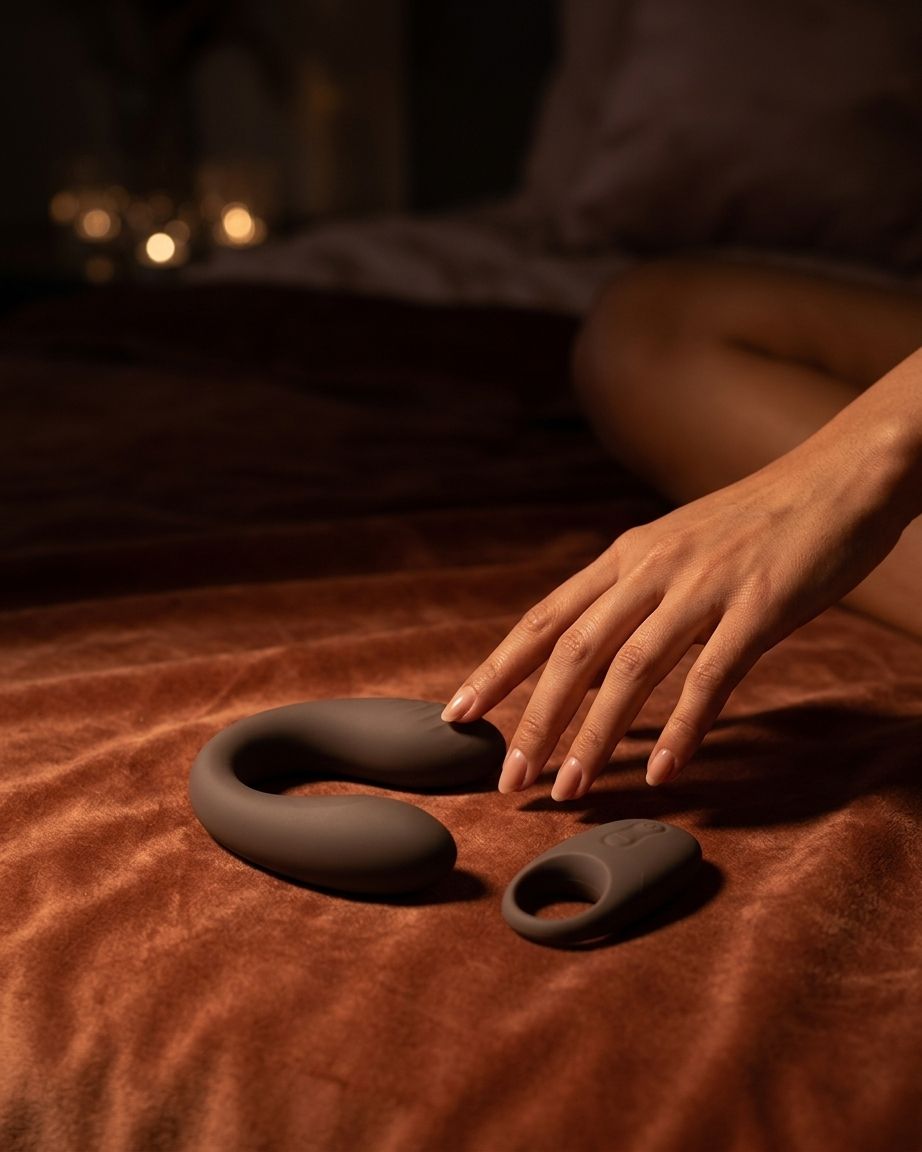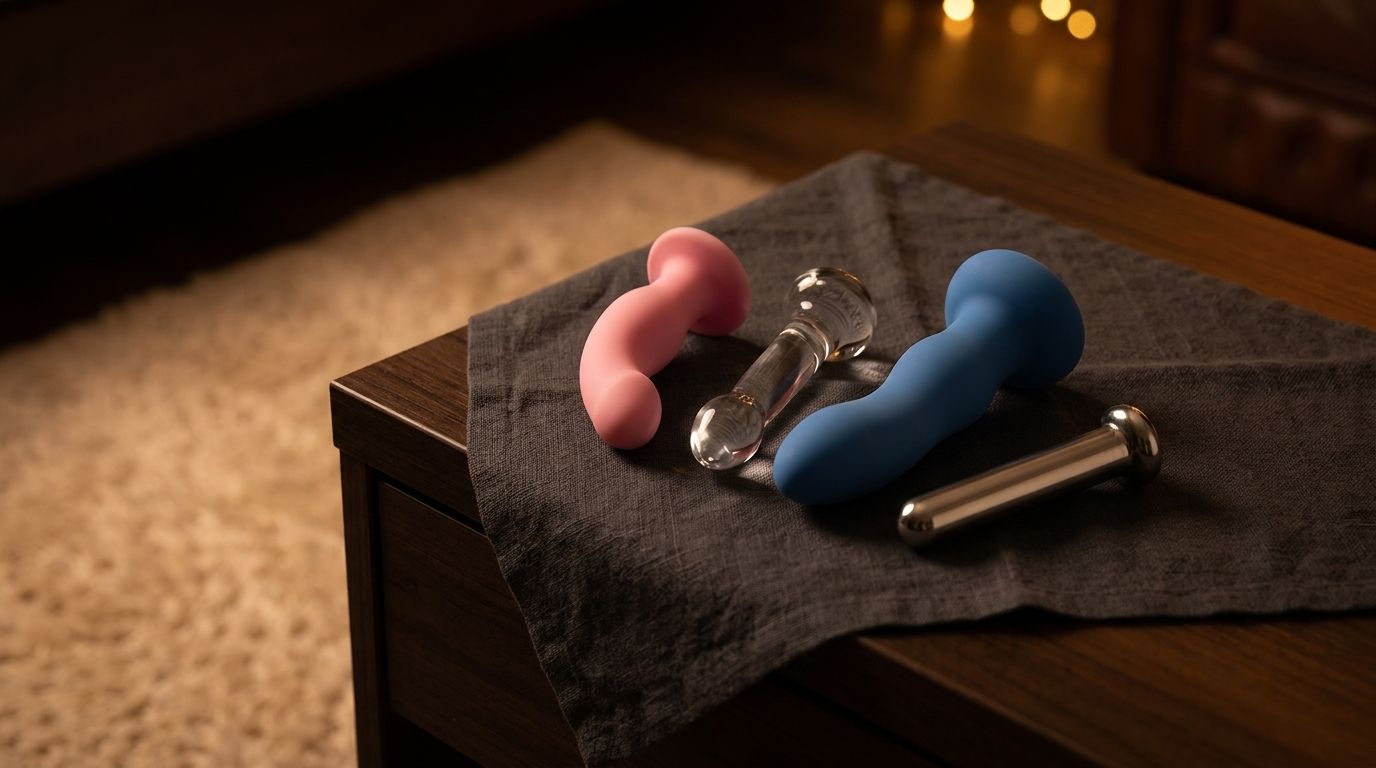
Best overall: a smooth, slim silicone dildo. Best for a particular shape preference: a gently curved design. Best for a stable setup: a suction-base design. This 2026 guide to the best dildos for beginners ranks design types rather than named products, so you can choose around comfort, care and control—not an intimidating list of extras.
- Honey Room’s best dildos for beginners guide puts smooth shapes, clear material information and manageable dimensions first.
- A smooth silicone design is the default; choose a curved design only when that shape matches your preference.
- Suction bases need a suitable surface, while glass needs careful handling and inspection.
- Check lubricant compatibility, cleaning instructions and intended use before choosing any beginner sex toy.
Why this matters
Your first dildo does not need to tick every possible box. It needs to feel like something you chose for yourself, without pressure from a partner, a product photograph or the idea that bigger means better.
At Honey Room, start with your preferences rather than the most eye-catching shape. A simple design gives you fewer features to evaluate, while clear specifications help you decide whether the toy suits you.
For a 2026 purchase, the useful questions remain straightforward: what is it made from, what are its dimensions, and how do you look after it? A photograph alone cannot answer those questions.
What makes the best dildos for beginners?
Use these criteria before comparing shapes. A promising design still needs clear product information.
- Clear material information: Look for a specific material description, not just a soft-touch or premium label. Material affects care and lubricant compatibility.
- Manageable dimensions: Compare maximum width, circumference where provided, and usable length. Overall length can include a base or handle.
- A straightforward surface: A smooth design removes texture as another variable while you learn your preferences.
- Comfortable control: Consider how you will hold the toy, whether the base helps, and whether the shape feels manageable.
- Practical care: Read cleaning, drying and storage instructions before buying. Choose something you can realistically maintain.
- The right intended use: Check the manufacturer’s instructions. For anal use, a toy needs a wide, flared base that prevents it from travelling fully inside.
Honey Room’s beginner dildo recommendation is to choose clear specifications over extra features. That rule is more useful than a universal size recommendation: bodies and preferences differ.
In 2026, do not treat a beginner label as a substitute for measurements. Compare 3 measurements—maximum width, usable length and total length—so the shape in the picture has a meaningful scale.
Beginner dildo designs at a glance
These are design categories, not separate stocked-product recommendations. Features can overlap: a smooth silicone dildo can also have a curve or suction base.
| Rank and design | Best for | Standout feature | Key limitation |
|---|---|---|---|
| 1. Smooth, slim silicone | A straightforward first choice | Simple surface and shape | Silicone firmness varies between products |
| 2. Gently curved silicone | A deliberate shape preference | A curve rather than a straight profile | The angle will not suit every preference |
| 3. Suction-base design | A more stable setup | Attaches to a suitable surface | Attachment depends on surface and product instructions |
| 4. Smooth glass | Those who prefer a rigid material | Firm, non-flexing shape | Requires careful handling and inspection |
| 5. Textured silicone | Those who already want texture | Raised surface details | Adds another variable to your first purchase |
1. Smooth silicone: best for a straightforward first choice
A smooth, slim silicone design is the clearest starting point when you do not yet have a strong preference. There is no texture to assess, and a simple profile makes the listed dimensions easier to interpret.
Silicone does not describe firmness on its own. Read the individual description rather than assuming every silicone toy bends or feels the same.
Smooth silicone pros:
- A plain surface keeps the choice focused on shape and dimensions.
- Straightforward designs avoid texture you have not specifically chosen.
- A clearly described material helps you check appropriate care instructions.
Smooth silicone cons:
- A simple appearance does not guarantee comfortable dimensions.
- Firmness and flexibility still need checking on the individual product.
Best for: Adults who want a first dildo without a strong curve or pronounced surface details.
For Honey Room shoppers comparing beginner dildos, this is the default design to assess first—not an instruction to ignore your own preferences. Choose a shape you feel comfortable considering, rather than one you feel you ought to want.
Verdict: Buy this style if you want a straightforward starting point and the specifications suit you.
2. Gently curved silicone: best for a deliberate shape preference
A gently curved design suits someone who already knows they would prefer an angled profile. The curve is the reason to choose it; it is not evidence that the toy is automatically better for beginners.
Compare the whole outline, including the widest point and any pronounced tip. A gentle-looking curve in a photograph still needs dimensions and a clear description.
Curved silicone pros:
- Offers a different profile from a straight design.
- Lets you prioritise shape without necessarily adding texture.
- Provides a clear selection criterion when you already prefer a curve.
Curved silicone cons:
- A fixed angle will not suit every body or preference.
- Curvature makes photographs less useful for judging usable length.
Best for: Beginners who specifically prefer a curved shape rather than choosing one because it sounds more advanced.
If you cannot explain why you want the curve, return to the simpler option. There is no reward for picking the more complicated shape first.
Verdict: Buy this style when the curve is a preference; hold if you are choosing it only for the feature list.
3. Suction-base designs: best for a more stable setup
A suction base attaches a compatible toy to a suitable surface. Its usefulness depends on the product, the surface and the instructions—not simply the presence of a suction cup.
Treat the base as a practical feature, not a promise that attachment will remain secure. Check its condition and attachment before relying on it.
Suction-base pros:
- Offers an attachment option on suitable surfaces.
- Adds a practical feature without necessarily adding texture.
- Gives you a specific setup requirement to assess before buying.
Suction-base cons:
- Uneven or unsuitable surfaces can prevent reliable attachment.
- The base adds bulk and needs cleaning too.
Best for: Beginners who have a suitable setup in mind and are willing to check attachment instructions.
A suction base does not establish waterproofing, and it does not automatically establish suitability for anal use. Those are separate checks. Never let an appealing feature replace the intended-use information.
Verdict: Buy this style for a suitable setup; skip it if you do not need surface attachment.
4. Smooth glass: best for a preference for rigidity
A glass dildo has a rigid shape rather than a flexible one. Choose only an item explicitly designed as an adult toy, with clear material and care information; household glass objects are not substitutes.
Glass deserves a deliberate decision rather than a default beginner recommendation. Inspect it for chips, cracks or other damage, and stop using it if damage appears.
Smooth glass pros:
- Offers a firm, non-flexing shape.
- A smooth design avoids added surface texture.
- Suits someone who has specifically decided against flexibility.
Smooth glass cons:
- Rigidity leaves less room for a preference for softness or bend.
- Dropping or damaging the toy creates a reason to stop using it.
Best for: Beginners who already know they want rigidity and will follow handling instructions carefully.
Do not assume glass is suitable for rapid temperature changes. Follow the manufacturer’s guidance, and avoid improvised heating, cooling or cleaning methods.
Verdict: Hold unless rigidity is a clear preference; choose a simpler flexible option if you are undecided.
5. Textured silicone: best for an existing texture preference
Textured designs include raised details such as ridges or contours. Those details create a different surface, but more detail does not mean a better first experience.
Choose texture because you want it, not because a plain design looks too basic. You can prefer simplicity without missing out.
Textured silicone pros:
- Gives you a defined surface feature to choose around.
- Offers an alternative when a completely smooth design does not appeal.
- Lets an existing preference guide the purchase.
Textured silicone cons:
- Adds another variable when your preferences are still unclear.
- Surface details need attention during cleaning, according to the care instructions.
Best for: Beginners who already have a clear preference for texture.
Keep the rest of the design straightforward if texture is your priority. Combining unfamiliar dimensions, a pronounced curve and raised details makes the decision harder to untangle.
Verdict: Hold if you are unsure; buy this style only when texture is something you actively want.
How to choose without overthinking it
Use this sequence to narrow your choice. You do not need to settle every possible preference before making a thoughtful decision.
Start simple
Choose the design feature that matters most to you: a smooth surface, a curve, attachment, rigidity or texture. If none stands out, return to smooth silicone as the comparison baseline.
Check dimensions
Write down the listed dimensions rather than relying on the product image. Keep total length separate from usable length, and do not treat either as a target you need to reach.
Check care
Read the cleaning instructions and lubricant guidance. Water-based lubricant is a straightforward starting point for many toys, but the manufacturer’s compatibility instructions take priority.
Agree boundaries
If a partner is involved, discuss preferences before introducing the toy. Either person can change their mind, pause or decide that shopping is enough for now.

Care and comfort come before extra features
Read the supplied instructions before first use, and clean the toy as directed. Dry and store it according to those instructions rather than assuming every material can be treated alike.
Do not assume a toy is waterproof, dishwasher-safe or suitable for boiling. A material name alone does not establish every cleaning method, especially where a design contains multiple components.
For shared toys, discuss hygiene as well as preferences. Barrier protection and cleaning matter when sharing or changing between body areas; follow appropriate sexual-health guidance rather than treating a quick wipe as a universal solution.
Discomfort is a reason to stop, not a challenge to complete. Do not push through pain. Seek advice from a qualified healthcare professional for persistent pain, bleeding or other concerns.
How the designs are ranked
This 2026 ranking prioritises a straightforward shape, clear specifications, manageable care and user control. Smooth silicone leads because it removes extra design variables—not because every silicone product suits every beginner.
The other categories serve distinct preferences. A curve answers a shape preference, suction answers a setup preference, glass answers a rigidity preference, and texture answers a surface preference.
Which beginner dildo should you choose?
Choose a smooth, slim silicone design if you are undecided. Check the actual dimensions, firmness description and care instructions before committing.
Choose a different category only when its defining feature answers something you already want. Honey Room’s best dildos for beginners guide is a decision aid, not a reason to talk yourself into a toy that does not appeal to you.
FAQ
What are the best dildos for beginners?
A smooth, slim silicone design is a straightforward default for beginners. Check the individual product’s dimensions, firmness, intended use and care instructions rather than relying on a beginner label.
What size dildo should a beginner choose?
There is no universal beginner size. Compare maximum width, usable length and total length, and choose around your comfort rather than treating a measurement as a goal.
Is silicone better than glass for a first dildo?
Smooth silicone is the default recommendation in this guide; glass suits a specific preference for rigidity. Silicone firmness varies, while glass requires careful handling and inspection for damage.
Do beginners need a suction-base dildo?
No, a suction base is an optional setup feature. Choose it only if you have a suitable surface and will follow the attachment instructions.
What lubricant should I use with a dildo?
Choose lubricant that the manufacturer confirms is compatible with the toy. Water-based lubricant is a straightforward starting point for many toys, but individual care instructions take priority.
Can any dildo be used anally?
No, anal use requires a suitable design with a wide, flared base that prevents the toy from travelling fully inside. Check the intended-use instructions; do not assume a handle or suction feature is sufficient.
How should I clean a beginner dildo?
Follow the manufacturer’s cleaning, drying and storage instructions. Do not assume that a toy can be boiled, submerged or put in a dishwasher simply because of its material.
One last thing
Before choosing your first dildo in 2026, separate 2 questions: do you want the toy, and do you want its extra features? A yes to the first does not require a yes to the second.
Honey Room’s simplest recommendation is to let curiosity set the direction and comfort set the pace. A plain design is a valid final choice—not merely a stepping stone.